
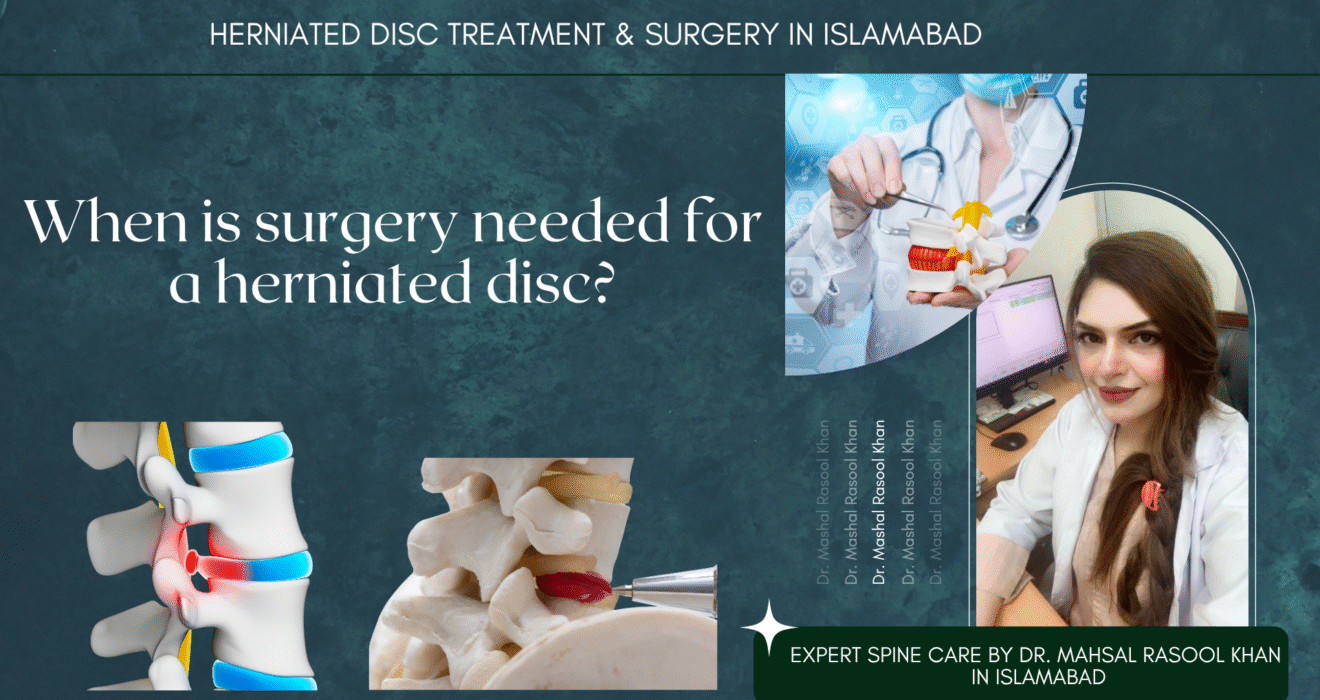
When is surgery needed for a herniated disc?
Introduction
If you have pain in your back or neck, numbness, or weakness in your legs or arms. You may be experiencing a herniated disc. A frequent spinal condition. That can significantly impact your quality of life.
Although the majority of cases are treated with medication, physiotherapy, and rest alone, occasionally surgery is the optimal or only way to achieve long-term relief.
In this article, we will discuss when and why surgery is required for a herniated disc and what it entails, and we will introduce you to Islamabad’s go-to herniated disc surgery expert, Dr. Mashal Rasool Khan, one of the only skilled female neurosurgeons based in the city.
What Is a Herniated Disc?
Your spine consists of bones (vertebrae) piled upon one another. With soft cushions known as discs in between. The discs function similarly to shock absorbers and enable you to move and bend gently.
A herniated disc, also referred to as a slipped. A ruptured disc occurs when the soft inner layer of the disc bulges outward through a rupture in the outer layer. This can put pressure on surrounding nerves. Leading to pain, numbness, or weakness.
- Common Symptoms of a Herniated Disc
- Lower back pain or neck pain
- Pain extending down your arm or leg (sciatica)
- Numbness or tingling in hands, feet, or legs
- Muscle weakness
- Pain or difficulty walking or standing for extended periods
If these symptoms persist or get worse after rest and medication, it may be time to have surgery.
When Is Surgery Indicated for a Herniated Disc?
Most individuals with a herniated disc get better with non-surgical care. But surgery could be suggested if:
- Severe, Persistent Pain: When back pain or neck pain persists for over 6–8 weeks despite medicines, physiotherapy, and rest.
- Symptoms of Nerve Compression: If you are experiencing worsening numbness, weakness, or pain that shoots down the arm or leg and interferes with everyday activities.
- Loss of Bladder or Bowel Control: A serious but unusual condition known as cauda equina syndrome due to a large herniated disc compressing spinal nerves. This is an emergency that needs surgical intervention.
- Difficulty Standing, Walking, or Using Limbs: When weakness in the legs, feet, or hands interferes with walking and maintaining balance.
What Kind of Surgery Is Performed for a Herniated Disc?
There are a few types of surgery, and your neurosurgeon will choose based on your situation:
- Discectomy (Microdiscectomy): Most frequently performed, in which the portion of the disc compressing the nerve is removed. Typically performed with a tiny incision and a microscope for accuracy.
- Laminectomy: Removing a tiny bone chip from the spine (lamina) to take pressure off the nerves.
- Spinal Fusion (if necessary): In severe cases, two or more vertebrae are joined together to stabilize the spine after disc removal.
Modern techniques are minimally invasive, meaning smaller cuts, less pain, quicker recovery, and minimal hospital stay.
Meet Dr. Mashal Rasool Khan—Islamabad’s Trusted Herniated Disc Surgery Specialist

If you are searching for a reliable, experienced herniated disc surgeon in Islamabad, look no further than Dr. Mashal Rasool Khan.
With over 10 years of advanced neurosurgery experience. Dr. Mashal specializes in both brain and spine surgeries, including complex herniated disc cases.
She is one of the very few female neurosurgeons in Islamabad. Offering both expertise and compassionate care for patients struggling with chronic back and neck issues. At Elite Surgery Doc, KRL Hospital Islamabad, Dr. Mashal applies the latest minimally invasive methods to provide quicker recovery, minimal pain, and superior results for her patients.
Why Select Dr. Mashal Rasool Khan?
- Extensively trained in advanced neurosurgery procedures
- More than 10 years of experience in disc and spine surgeries
- Extra emphasis on patient education, transparent communication, and compassionate care
- Certified as the top female herniated disc surgeon in Islamabad
- Superior patient recovery success with customized care plans
What are the risks of herniated disc surgery?
Though contemporary spine surgeries are safe, as with any operation, there are some risks:
- Infection
- Bleeding
- Nerve damage (rare)
- Recurrence of disc herniation
But with an experienced herniated disc surgery specialist. Such as Dr. Mashal Rasool Khan, risks are reduced by meticulous planning, precision techniques, and dedicated postoperative care.
Recovery after herniated disc surgery
Most patients:
- Spend 1–2 days in the hospital
- Return to light activity within a week
- Return to normal work in 4–6 weeks
- Have strong pain relief within a short time
Follow-up physical therapy aids your muscles and avoids future issues.
FAQs
Q. How do I know I need herniated disc surgery?
If you experience pain, numbness, or weakness for over 6–8 weeks after other treatments, see a spine specialist.
Q. Is herniated disc surgery painful?
No, it’s done with anesthetics. Pain following surgery can be controlled by medication.
Q. Can a herniated disc be healed without surgery?
Yes, many improve with rest, physical therapy, and medications. Surgery is reserved for when symptoms continue or get worse.
Conclusion: Don’t Let Back Pain Run Your Life
Living with the pain of a herniated disc is challenging, but professional assistance is possible. If conservative measures haven’t helped, perhaps it’s time to have surgery for long-term relief.
Dr. Mashal Rasool Khan, Islamabad’s reliable herniated disc surgery specialist, is here to assist you in walking comfortably again with state-of-the-art, minimally invasive techniques and empathetic care.
Schedule your appointment today and take the first step toward a pain-free, active lifestyle.

