A slipped disc can make everyday activities surprisingly difficult. Sitting at work, bending down, or finding a comfortable sleeping position can become painful when a disc presses on a nearby nerve. But does it always require surgery? The good news is that slip disc treatment often starts with non-surgical care, and many people improve without an operation.
From medication and physiotherapy to surgery, understanding the available options can help you make informed decisions with your doctor.
What Is a Slip Disc?
Your spine contains flexible discs that cushion the vertebrae and help you move comfortably. Each disc has a soft centre surrounded by a tougher outer layer. When this outer layer tears, inner material may protrude and irritate nearby nerves.
Symptoms can include back or neck pain, tingling, numbness, or muscle weakness. A lower back disc may cause pain that travels down a leg, while a cervical disc can affect the shoulder, arm, or hand. Mayo Clinic explains the symptoms and causes of a herniated disc.
A Quick Look at Slip Disc Treatment Options
| Treatment | What It Helps With | When It May Be Recommended |
|---|---|---|
| Medication and activity modification | Helps manage pain and maintain movement | Often part of initial treatment |
| Physiotherapy and guided exercises | Supports mobility, strength, and everyday function | During recovery and rehabilitation |
| Cervical slip disc treatment | Addresses neck pain and related nerve symptoms | When the affected disc is in the neck |
| Epidural steroid injections | May reduce inflammation and radiating pain | Suggested in cases of sharp and radiating pain |
| Endoscopic minimally invasive disc surgery | Removes disc material pressing on a nerve | When surgery is appropriate and less invasive techniques are suitable |
| Traditional spine surgery | Relieves nerve compression through an appropriate surgical approach | Selected cases of acute, severe sciatica involving persistent symptoms or significant nerve problems |
The right treatment depends on the disc’s location, symptom severity, nerve involvement, and response to initial care. NHS guidance says most people don’t need surgery.
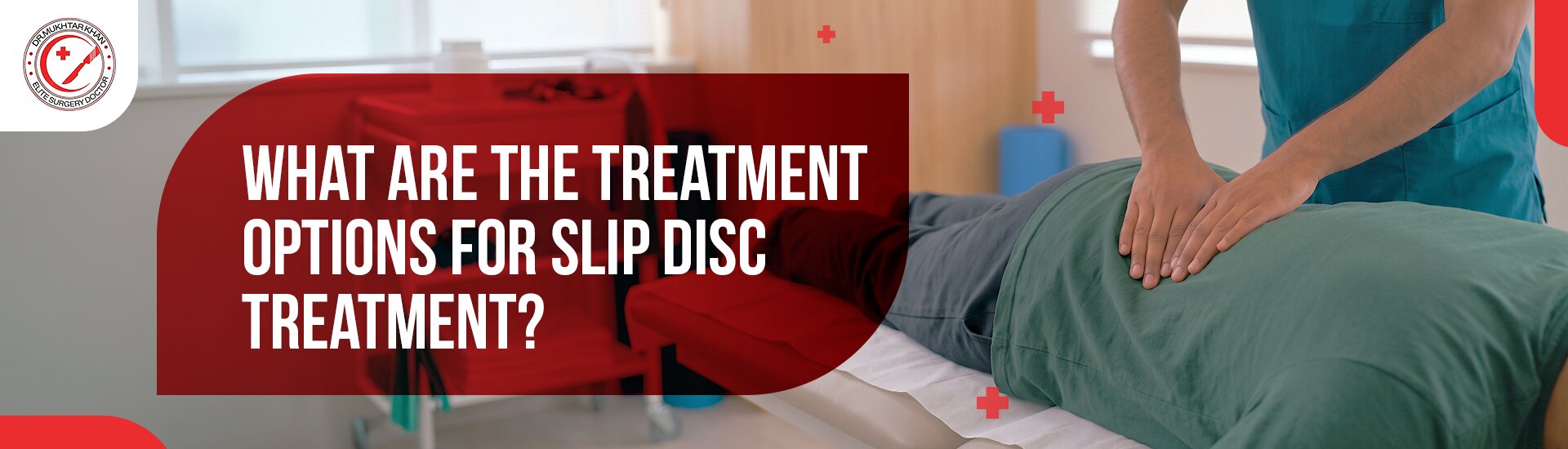
What Are the Treatment Options for a Slipped Disc?
The right slip disc treatment options depend on your symptoms, the affected spinal region, and whether nerves are involved.
1. Medication and Activity Modification
A doctor may recommend pain relief or anti-inflammatory medication, depending on your health and symptoms. Short periods of rest may help during severe pain, but prolonged bed rest is generally discouraged.
Gentle movement and short walks, as tolerated, can help you stay active during recovery. Avoid activities that significantly worsen your symptoms. NHS advice on slipped discs provides further information about treatment and recovery.
2. Physiotherapy and Guided Exercises
Physiotherapy can help improve mobility and guide you through exercises suited to your symptoms. Your physiotherapist may recommend specific movements, posture adjustments, and progressive strengthening to support a return to everyday activities.
Adjust exercises if pain, numbness, or weakness increases. Mayo Clinic’s treatment guidance describes how physical therapy may help manage a herniated disc.
3. Cervical Slip Disc Treatment
A slipped disc in the neck can cause pain that spreads into the shoulders or arms, along with tingling, numbness, or weakness.
Cervical slip disc treatment may include medication, activity modification, and supervised physiotherapy. Further assessment or imaging may be needed if symptoms persist or exam findings suggest nerve involvement. Worsening arm weakness, hand coordination problems, or balance difficulties need prompt medical assessment.
4. Epidural Steroid Injections
If pain travelling down an arm or leg persists, a specialist may consider injecting a corticosteroid near the affected nerves. It can reduce inflammation and may provide temporary relief, although results vary.
Injections are not suitable for every type of back pain. NICE recommends considering epidural local anaesthetic and steroid injections for acute, severe sciatica. Read the NICE recommendations.
5. Endoscopic Minimally Invasive Disc Surgery
Surgery may be considered when symptoms do not improve with appropriate non-surgical treatment or when significant nerve problems develop.
Procedures such as endoscopic discectomy use specialised instruments to remove disc material pressing on a nerve through a small incision. The appropriate technique depends on the disc’s location, the nature of the compression, and the patient’s condition.
Elite Surgery Doc provides information about its surgical services. A specialist can explain which procedures, if any, fit your diagnosis.
6. Traditional Spine Surgery
Some patients need a different surgical approach depending on the location and severity of the disc problem. A discectomy removes the portion of the disc pressing on a nerve. Certain cervical conditions may require additional procedures, such as spinal fusion, when clinically indicated.
Your surgeon will explain the potential benefits, risks, and recovery expectations of the recommended procedure. Mayo Clinic’s guide to herniated disc treatment outlines common surgical approaches.
Which Is the Best Treatment for a Slip Disc?
The best treatment depends on your symptoms and how much the disc affects nearby nerves. Many people improve with non-surgical care, while persistent pain or worsening weakness may require a surgical opinion.
A slipped disc treatment specialist can assess your symptoms, examine nerve function, and determine whether imaging or further treatment is necessary.
Can a Slip Disc Heal Without Surgery?
Yes. Many slipped discs improve over time without surgery, and symptoms may settle as inflammation decreases or the displaced disc material shrinks. Recovery varies from person to person, so see a doctor if symptoms persist or worsen. Mayo Clinic explains when surgery may be considered.
Seek emergency medical care if you develop new difficulty urinating, loss of bladder or bowel control, numbness around the groin or buttocks, or rapidly worsening leg weakness. These symptoms may indicate serious nerve compression that requires urgent assessment.
When Is Slip Disc Surgery Needed?
Surgery may be recommended when non-surgical treatment has not improved pain or function and examination or imaging findings support the diagnosis. It may also be necessary when significant or progressive nerve problems develop. NICE recommends considering spinal decompression for sciatica when non-surgical treatment has not improved pain or function and imaging findings match the symptoms. See NICE’s clinical recommendations.
A specialist will consider your symptoms, examination findings, imaging results, and overall health before recommending surgery.
Get the Right Guidance for Your Spine Health
Back or neck pain can disrupt sleep, work, and everyday activities. Effective slip disc treatment starts with understanding the cause of your symptoms and choosing care suited to your condition.
Visit Elite Surgery Doc to learn more about its specialist services and discuss appropriate treatment options.
FAQs
Q1: What is the best treatment for a slipped disc?
A: Treatment depends on symptom severity and nerve involvement. Many people improve with medication, appropriate activity, and physiotherapy. Surgery may be considered if symptoms persist or if significant nerve problems develop.
Q2: How long does a slipped disc take to heal?
A: Recovery varies. Symptoms may improve over several weeks, but some people take longer, particularly if nerve irritation persists. A doctor can advise you based on your symptoms and progress.
Q3: Can a slipped disc heal without surgery?
A: Yes. Many slipped discs improve without an operation. However, consult a doctor to assess your symptoms and determine the appropriate treatment. Seek emergency care for new bladder or bowel problems, numbness around the groin, or rapidly worsening weakness.