Surgical Specialty
Disc & Minimally Invasive Spine Surgery
Dr. Mashal Rasool Khan provides neurosurgical care for slipped discs, nerve compression, spinal stenosis, and related spine conditions, with minimally invasive treatment options where clinically appropriate.
What this covers
Targeted Care for Spine Conditions
Your spine protects the nerves responsible for movement and sensation. When a disc becomes damaged, or a nerve pathway becomes narrowed, it can lead to pain, numbness, tingling, or weakness. We focus on identifying the underlying cause and recommending treatment suited to your condition.
Disc-Related Conditions
Treatment for slipped, bulging, or herniated discs that can irritate or compress nearby nerves and cause persistent symptoms.
Nerve & Spinal Canal Conditions
Care for compressed nerves and spinal canal narrowing, with treatment tailored to the location, severity, and cause of the condition.
Endoscopic Disc Surgery
A minimally invasive approach for selected disc-related conditions and nerve compression, allowing targeted treatment through smaller access points where clinically appropriate.
The minimally invasive approach
What Is Minimally Invasive Spine Surgery?
Minimally invasive spine surgery uses specialized instruments and smaller incisions to access and treat certain spinal conditions while reducing disruption to the muscles and other tissues surrounding the spine. It may be used for selected conditions, including some herniated discs, nerve compression, and spinal stenosis, when surgery is considered appropriate.
Smaller Incisions
Smaller incisions and specialized instruments help the surgeon reach the affected area while limiting disruption to surrounding tissues.
Targeted Treatment
The surgeon accesses the affected area through a focused approach to treat the underlying cause of nerve or spinal compression.
Focused Recovery
Minimally invasive techniques may reduce tissue disruption and support recovery in appropriately selected patients. Recovery varies by procedure and individual circumstances.
When to seek evaluation
Symptoms That May Need Assessment
Not every back or neck symptom requires surgery, but certain symptoms may need medical assessment.
Radiating Pain
Pain that travels from the neck into an arm or from the lower back into a leg may occur when a spinal nerve is irritated or compressed.
Numbness
Numbness or pins and needles in an arm, hand, leg, or foot can occur when a spinal nerve is compressed.
Muscle Weakness
Weakness in an arm or leg, such as difficulty lifting the foot or gripping objects, may indicate nerve involvement.
Walking Difficulty
Pain, numbness, heaviness, or weakness in the legs that develops or worsens with standing or walking can occur with spinal stenosis.
Procedures
Spinal Conditions Treated With Minimally Invasive Techniques
Several spinal conditions can cause pain, numbness, or weakness. A careful assessment helps identify the underlying condition and determine whether a minimally invasive approach is appropriate.
01
Disc Herniation
02
Nerve Root Compression
03
Spinal Canal Stenosis
04
Foraminal Stenosis
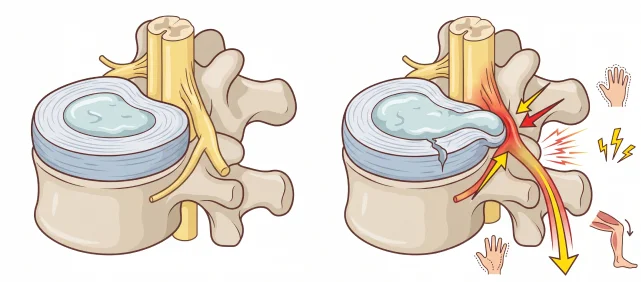
Disc Herniation
A herniated disc occurs when the inner gel-like material of a spinal disc protrudes through a weakened or torn outer layer. If it irritates or compresses a nearby nerve, it may cause radiating pain, numbness, tingling, or weakness.
Common symptoms
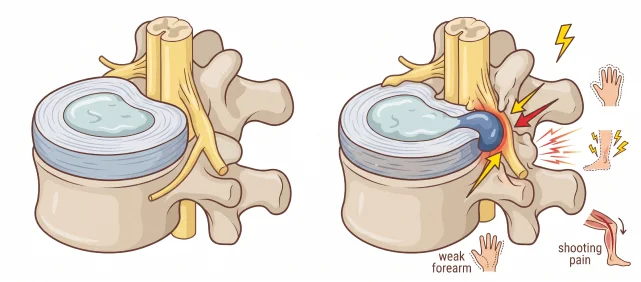
Nerve Root Compression
Nerve root compression occurs when a spinal nerve root becomes irritated or compressed, commonly due to a herniated disc, bone spurs, or degenerative changes. It may cause shooting pain, altered sensation, or weakness along the affected nerve distribution.
Common symptoms
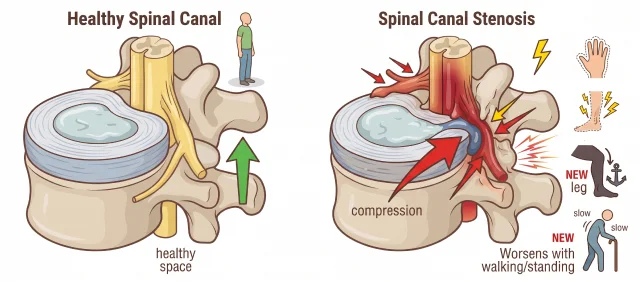
Spinal Canal Stenosis
Spinal stenosis occurs when spaces within the spine become narrowed, potentially putting pressure on spinal nerves or the spinal cord. Lumbar stenosis may cause leg pain, numbness, heaviness, or weakness that worsens with standing or walking.
Common symptoms
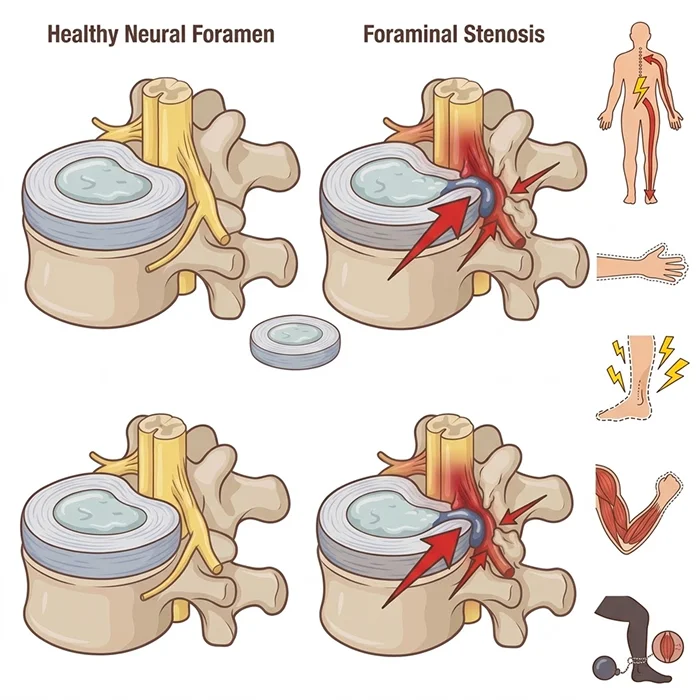
Foraminal Stenosis
Foraminal stenosis occurs when the openings through which spinal nerves exit become narrowed, potentially compressing a nerve root. It may result from age related changes, bone spurs, or disc changes and can cause pain, numbness, or weakness in an arm or leg.
Common symptoms
What treatment involves
Expert Care From Assessment to Recovery
1
Specialist Consultation
Discuss your symptoms, medical history, and concerns with Dr. Mashal Rasool Khan.
2
Clinical Assessment
A neurological examination and appropriate imaging or diagnostic tests help identify the underlying condition.
3
Treatment Planning
Based on the diagnosis, the appropriate non surgical or minimally invasive approach is determined.
4
Recovery & Follow Up
Personalized follow up helps monitor your recovery and guide your return to normal activities.

Dr. Mashal Rasool Khan
Jinnah Postgraduate Medical Centre (JPMC), Karachi
Your surgeon
Dr. Mashal Rasool Khan
Dr. Mashal Rasool Khan is a neurosurgeon based in Islamabad with a clinical focus on spinal and nerve related disorders, including minimally invasive spine procedures. She completed her MBBS from Liaquat National Medical College and received surgical training and experience at Jinnah Postgraduate Medical Centre (JPMC), Karachi.
Her clinical practice focuses on accurate diagnosis and appropriate treatment planning for patients with spinal and neurological conditions, with minimally invasive approaches considered where clinically appropriate.
Qualification
MBBS
Medical Education
Liaquat National Medical College
Clinical Practice
Ali Medical Centre, Islamabad
Clinical Focus
Spine & Nerve Related Neurosurgery
Common questions
Before you book.
Do I need surgery for a slipped disc, or can it heal on its own?
Many slipped discs improve with rest, physiotherapy, and medication over a few weeks. Surgery is usually considered only if pain persists, worsens, or comes with numbness or weakness that affects daily function.
How is nerve compression different from general back pain?
General back pain tends to stay localized, while nerve compression usually radiates and causes sharp, shooting pain, tingling, or numbness that travels along a specific nerve path into the arm or leg.
Is minimally invasive surgery an option for spinal stenosis?
In many cases, yes. Depending on the severity of the narrowing, a minimally invasive decompression procedure can relieve pressure on the nerves through small incisions, often allowing for a quicker recovery than traditional open surgery.
Book a consultation
Get clarity on the right treatment for you.
Speak with Dr. Mukhtar Khan about your condition and options. No obligation, just a clear next step.